

How Industrial Bag Filter Housings Are Manufactured and What Buyers Should Know
In industrial liquid filtration systems, bag filter housings are essential components that protect downstream equipment and ensure product quality. These housings are used to capture suspended solids, dirt, and particulate matter from liquids across industries such as water treatment, chemical processing, food and beverage, and pharmaceuticals.
Understanding how bag filter housings are designed, fabricated, and selected can save companies time, reduce maintenance costs, and prevent filtration failures. This guide explains the key aspects of bag filter housings and highlights how working with an experienced manufacturer like Recalyx can improve operational efficiency.
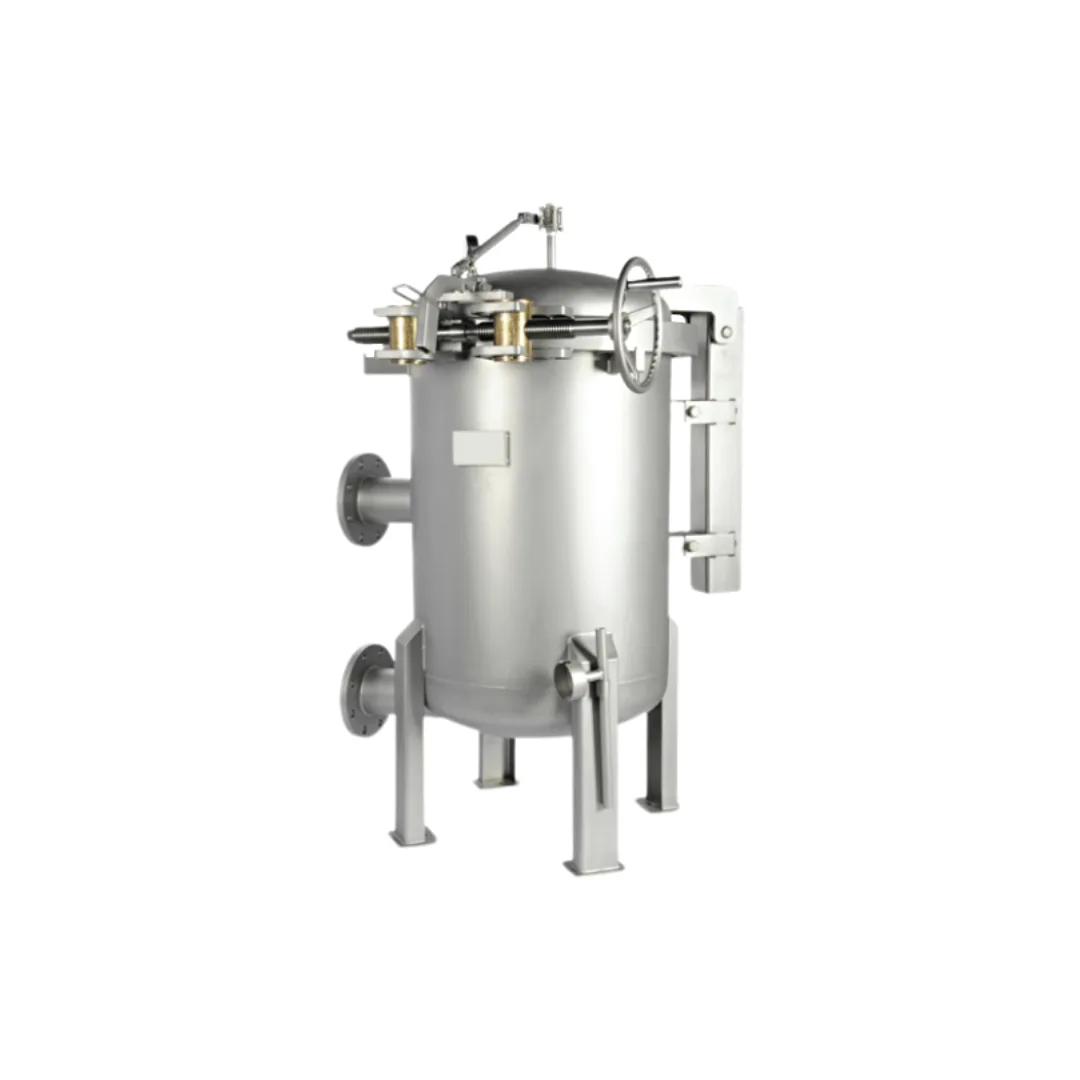
What Is a Bag Filter Housing?
A bag filter housing is a pressure vessel designed to hold a replaceable filter bag. Liquid flows into the housing, passes through the bag, and exits while solids remain trapped inside.
Bag filter housings are typically used for medium-flow applications, while larger multi-bag systems are designed for higher-capacity industrial processes. Their primary benefits include:
- High dirt-holding capacity
- Easy maintenance and bag replacement
- Compatibility with a wide range of industrial liquids
By understanding these principles, companies can make better decisions when selecting filtration systems.
Materials Used in Bag Filter Housings
The choice of material is critical for industrial filtration. Stainless steel is the most common material used in bag filter housings due to its durability, corrosion resistance, and ability to withstand high temperatures and pressures.
- Stainless Steel 304: Suitable for general industrial and water filtration applications.
- Stainless Steel 316L: Recommended for aggressive chemical environments or corrosive liquids.
A reputable manufacturer ensures that the materials meet industry standards and are suitable for specific operational conditions.
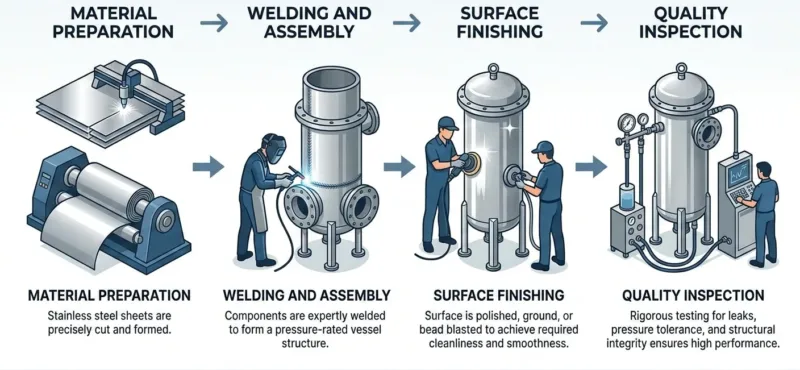
The Manufacturing Process
A high-quality bag filter housing requires precision engineering and fabrication. The manufacturing process typically includes:
- Material Preparation: Stainless steel sheets or plates are cut and rolled to size.
- Welding and Assembly: TIG or MIG welding techniques are used to join the parts, forming a pressure-rated vessel.
- Surface Finishing: Polishing, bead blasting, or other finishing ensures smooth surfaces, reducing particle buildup and facilitating cleaning.
- Quality Inspection: Each housing is tested for leaks, pressure tolerance, and structural integrity before shipment.
Partnering with a manufacturer like Recalyx, which follows strict fabrication standards, ensures housings meet both durability and compliance requirements.
Pressure and Temperature Considerations
Industrial filtration systems operate under various pressures and temperatures. Selecting a bag filter housing requires careful attention to:
- Maximum working pressure
- Operating temperature
- Compatibility of seals and gaskets (e.g., EPDM, Viton, PTFE)
Using housings beyond their rated pressure or temperature can cause seal failure, leakage, or catastrophic vessel damage. Manufacturers like Recalyx provide detailed specifications and support to ensure safe operation under industrial conditions.
Standard vs Custom Fabrication
While standard bag filter housings meet many industrial needs, some applications require custom designs. Key customization options include:
- Flanged or sanitary connections
- High-pressure reinforcement
- Quick-open or swing-bolt closures
- Specific inlet/outlet configurations
- Special surface finishes for hygienic or chemical applications
Recalyx specializes in providing both standard and custom single bag filter housings, ensuring compatibility with unique industrial systems.
Applications of Bag Filter Housings
Bag filter housings are widely applied in various industries:
- Water and Wastewater Treatment: Remove sediments and particulate matter before discharge or reuse.
- Chemical Processing: Filter aggressive liquids and solvents while maintaining system integrity.
- Food and Beverage: Maintain hygiene and prevent contamination of edible products.
- Pharmaceuticals: Capture particulates during production to comply with safety standards.
- Oil, Lubricants, and Petrochemicals: Remove contaminants from fluids to prevent equipment damage.
- Pre-Filtration for Membranes: Extend the life of RO and UF systems by removing solids before membrane filtration.
By understanding the specific application, companies can select the correct housing type, size, and material.
How to Choose the Right Bag Filter Housing
Key factors to evaluate when selecting a housing include:
- Flow Rate: Ensure the housing accommodates your required GPM or m³/h.
- Operating Conditions: Pressure, temperature, and chemical exposure must match material and design.
- Bag Size and Micron Rating: Select bags compatible with your process requirements.
- Ease of Maintenance: Quick-open closures reduce downtime.
Conclusion
Bag filter housings are vital for industrial filtration, protecting downstream equipment and maintaining product quality. Understanding fabrication, materials, pressure and temperature limits, and customization options allows businesses to make informed decisions.
For businesses seeking high-quality stainless steel bag filter housings, Recalyx provides reliable solutions tailored to industrial requirements. Whether standard or custom-designed, their housings are engineered for durability, efficiency, and compliance with safety and industry standards.
Explore the full range of bag filter housings and consult with the Recalyx team for technical guidance and project-specific design support.
FAQs
What materials are commonly used in bag filter housings?
Stainless steel 304 and 316L are commonly used due to corrosion resistance, chemical compatibility, and durability under high pressure and temperature conditions.
What is the difference between single bag and multi-bag filter housings?
Single bag housings hold one filter bag, suitable for medium-flow applications. Multi-bag housings hold several bags, supporting higher flow rates and larger industrial systems.
Are bag filter housings suitable for high-temperature or chemical applications?
Yes. With proper material selection and compatible seals (e.g., Viton or PTFE), bag filter housings can handle high-temperature liquids and chemical processes. Recalyx provides guidance on suitable materials for specific industrial fluids.